Marketing objectives are an integral part of any successful marketing strategy, and restaurants are no exception. By setting clear, measurable, and attainable marketing objectives, a restaurant can focus its efforts and allocate its resources effectively in order to attract and retain customers. In this article, we will explore five key marketing objectives that a restaurant might set in order to achieve its business goals and be successful in today’s competitive market.
The short answer: the five marketing objectives most restaurants need are to increase brand awareness, build customer loyalty, drive more traffic, increase sales, and improve customer satisfaction. Each one works best as a SMART objective with a number and a date, for example “increase direct online orders by 20% by 31 March”.
Here is the list of all Marketing Objectives for a Restaurant, Go ahead and click on any of these links, and you’ll be taken to that specific section.
- Increase Brand awareness
- Boosting Customer Loyalty
- Driving traffic to the Restaurant
- Increasing Sales
- Improving customer satisfaction
- How to turn these into SMART objectives
- Examples of restaurant marketing objectives
- How to measure them
- Conclusion
- Frequently asked questions
Increase brand awareness #
One of the main goals of marketing for a restaurant is to increase brand awareness, or the extent to which people are aware of the restaurant’s brand. This can be achieved through a variety of marketing channels, such as social media, advertising, public relations, and word-of-mouth. By increasing brand awareness, a restaurant can reach a wider audience and make more people aware of its offerings.
There are several strategies that a restaurant can use to increase brand awareness, including:
- Developing a strong brand identity: This involves creating a unique and consistent visual identity, such as a logo, color scheme, and brand voice, that sets the restaurant apart from its competitors.
- Utilizing social media: Social media platforms like Facebook, Instagram, and Twitter can be powerful tools for reaching a large audience quickly and efficiently. By regularly posting high-quality content, interacting with customers, and running paid advertising campaigns, a restaurant can increase its visibility and reach on social media.
- Advertising: Advertising can be an effective way to reach a large audience and raise awareness of the restaurant’s brand. This could involve running ads in print or online media, on radio or television, or on billboards or other outdoor advertising channels.
- Public relations: Public relations involves building relationships with media outlets and influencers in order to generate positive coverage for the restaurant. This could involve sending press releases, hosting media events, or working with food bloggers and influencers to promote the restaurant.
Boosting customer loyalty #
Customer loyalty is an important goal for any restaurant, as loyal customers are more likely to return to the restaurant and recommend it to others. A restaurant can set the goal of increasing customer loyalty by offering loyalty programs, discounts, or other incentives to encourage repeat business.
There are several strategies that a restaurant can use to boost customer loyalty, including:
- Loyalty programs: Loyalty programs reward customers for their business by offering points, rewards, or discounts for each purchase they make. These programs can be a powerful way to encourage repeat business and build customer loyalty.
- Personalized experiences: By offering personalized experiences, such as custom menu recommendations or tailored promotions, a restaurant can make customers feel valued and create a sense of loyalty.
- Excellent service: Providing excellent service can be a key factor in building customer loyalty. This could involve training staff to be friendly and attentive, responding promptly to customer inquiries or complaints, and going above and beyond to meet customer needs.
- Community involvement: By participating in local events and supporting community organizations, a restaurant can build goodwill and create a sense of loyalty among its customers.
Driving traffic to the restaurant #
Attracting new customers to the restaurant is an important goal for any business. A restaurant can set the goal of driving traffic to its location by using various marketing techniques to reach new audiences.
There are several strategies that a restaurant can use to drive traffic to its location, including:
- Online reviews: Encouraging customers to leave positive reviews on sites like Yelp, Google, and TripAdvisor can help the restaurant to attract new customers. Local guides, like this healthy restaurants directory for Malta, also help diners find you.
- Local marketing: Targeting marketing efforts to a specific geographic area, such as a neighborhood or city, can be an effective way to drive traffic to the restaurant. This could involve using local directories, running local advertising campaigns, or participating in community events.
- Social media: Using social media to promote the restaurant can be an effective way to reach new audiences and drive traffic to the restaurant. This could involve posting high-quality content, interacting with followers, and running paid advertising campaigns on platforms like Facebook, Instagram, and Twitter.
- Email marketing: By collecting email addresses from customers and sending out newsletters or promotional emails, a restaurant can stay top-of-mind with its audience and drive traffic to its location.
- Influencer marketing: Partnering with influencers or bloggers who have a large following can be an effective way to reach new audiences and drive traffic to the restaurant.
Increasing sales #
One of the main goals of marketing for a restaurant is to increase sales and revenue. This can be achieved by promoting special deals or discounts, creating new menu items, or increasing the restaurant’s online presence.
There are several strategies that a restaurant can use to increase sales, including:
- Promotions and discounts: Offering promotions or discounts can be a powerful way to attract new customers and encourage repeat business. This could involve offering discounts on certain menu items, running a special deal for first-time customers, or offering loyalty rewards for frequent diners.
- New menu items: Introducing new menu items can be an effective way to attract new customers and increase sales. This could involve adding new dishes to the menu, offering limited-time specials, or introducing new menu items that are in line with current food trends.
- Online presence: Increasing the restaurant’s online presence can be an effective way to reach new customers and drive sales. This could involve optimizing the restaurant’s website for search engines, using social media to promote the restaurant, or running online advertising campaigns.
Improving customer satisfaction #
Customer satisfaction is an important goal for any business, as happy customers are more likely to return and recommend the restaurant to others. A restaurant can set the goal of improving customer satisfaction by offering high-quality food, excellent service, and a pleasant atmosphere.
There are several strategies that a restaurant can use to improve customer satisfaction, including:
- High-quality food: Offering high-quality, fresh, and flavorful food is essential for customer satisfaction. This could involve sourcing ingredients from local farms or using high-quality cooking techniques and equipment.
- Excellent service: Providing excellent service can be a key factor in improving customer satisfaction. This could involve training staff to be friendly and attentive, responding promptly to customer inquiries or complaints, and going above and beyond to meet customer needs.
- Pleasant atmosphere: Creating a pleasant atmosphere can be an important factor in customer satisfaction. This could involve designing a visually appealing dining space, using music or other sensory elements to create the desired atmosphere, and maintaining a clean and well-maintained restaurant.
How Do You Turn These Into SMART Objectives? #
A goal says where you want to go; an objective says exactly how far and by when. SMART is the usual test for a good objective:
- Specific: one clear result, such as more weekday lunch covers.
- Measurable: a number you can track, such as covers, orders or reviews.
- Achievable: a stretch from where you are today, not a guess.
- Relevant: it supports what the business needs most right now.
- Time-bound: a deadline, usually 30, 60 or 90 days.
Worked example (made-up café): a café serves about 400 weekday lunches a month. “Get more lunch customers” is a goal. “Grow weekday lunch covers from 400 to 480 a month (20%) by 31 March, through Google Business Profile posts and a local lunch offer” is a SMART objective, because you can check it on 1 April.
Examples of Restaurant Marketing Objectives #
Use these as starting points. The numbers are examples: set yours from your own figures today.
| Objective | Example SMART objective | How to measure it |
|---|---|---|
| Awareness | Raise Google Business Profile views by 30% in 90 days | Google Business Profile performance report |
| Local search | Appear in the top 3 on Google Maps for “[your cuisine] near me” in your area within 6 months | A weekly search from your area, or a rank tracker |
| New guests | Get 150 first-time bookings a month through your website by the end of June | Reservation system, new vs returning guests |
| Online orders | Grow direct online orders (not through delivery apps) by 20% in 3 months | Your online ordering system |
| Average spend | Raise the average check per table by 8% in 90 days | Point-of-sale (POS) reports |
| Repeat visits | Have 30% of guests come back within 60 days | Loyalty program or POS guest data |
| Loyalty | Sign up 1,000 loyalty members in 6 months | Loyalty program dashboard |
| Reviews | Reach a 4.5-star average from 100 Google reviews in 12 months | Google Business Profile reviews |
| Email list | Grow the email list to 2,000 guests by the end of the year | Your email tool |
How Do You Measure Them? #
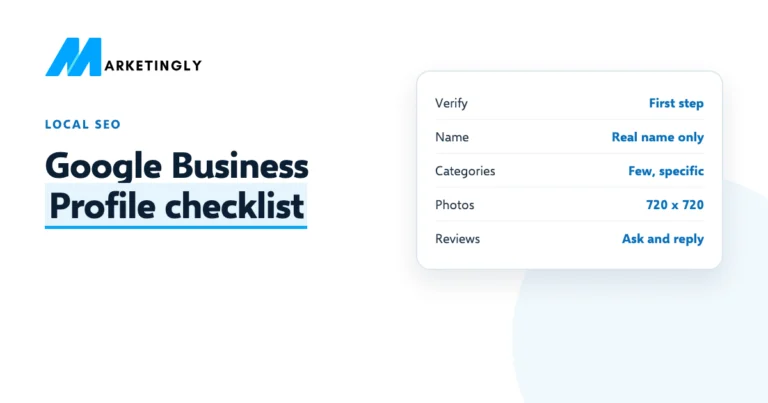
- Google Business Profile: views, calls, direction requests and website clicks.
- Your point-of-sale (POS) system: covers, average check, best-selling dishes and repeat guests.
- Reservation and ordering systems: bookings and orders by source.
- Google Analytics: visits to your menu and booking pages, and where they came from.
- Review sites: your rating and how many new reviews you get each month.
Check them once a month against the number you started from, and keep three to five objectives at a time so the team knows what matters.
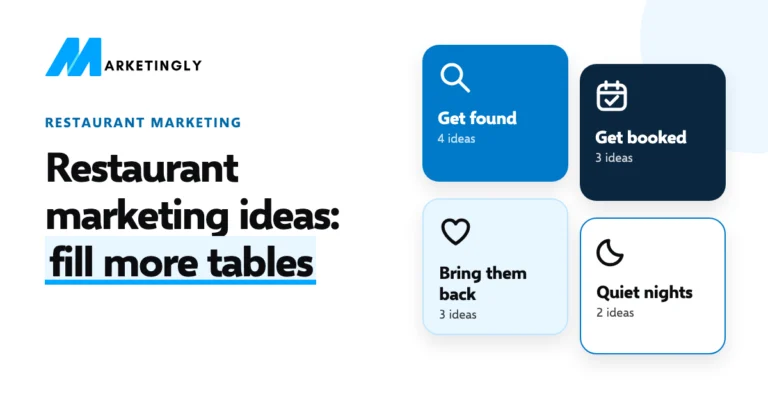
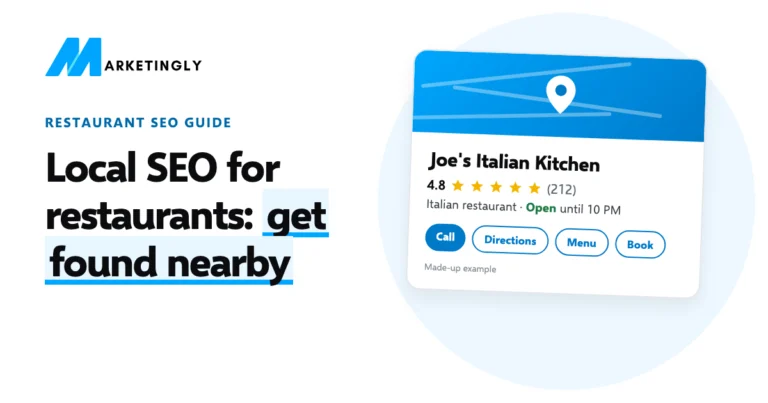
To hit these objectives, see our restaurant marketing ideas and the steps in local SEO for restaurants.
Conclusion #
Marketing objectives are essential for helping a restaurant to achieve its business goals and attract and retain customers. By setting clear and measurable objectives, such as increasing brand awareness, boosting customer loyalty, driving traffic to the restaurant, increasing sales, and improving customer satisfaction, a restaurant can focus its efforts and allocate its resources effectively in order to achieve success. By regularly reviewing and adjusting its marketing objectives, a restaurant can ensure that it is on track to achieve its business goals and continue to grow and thrive. By focusing on these key marketing objectives, a restaurant can stay competitive in today’s market and attract and retain loyal customers.
Frequently Asked Questions #
What is the difference between restaurant goals and objectives? #
A goal is the result you want, such as more regular guests. An objective is a measurable step towards it, with a number and a deadline, such as 30% of guests returning within 60 days.
How many marketing objectives should a restaurant have? #
Three to five at a time. More than that spreads the budget and the team too thin, and it becomes hard to tell what worked.
What is an example of a SMART marketing objective for a restaurant? #
“Grow direct online orders by 20% in the next 3 months.” It is specific (direct online orders), measurable (20%), realistic for most restaurants, relevant if delivery-app fees eat your margin, and time-bound (3 months).