SaaS content marketing is publishing useful pages that attract the right people, help them decide and bring them to a trial. The aim is not to write a lot. It is to write the right kinds of page in the right order, and to measure whether they bring sign-ups. This guide shows what to publish, a simple calendar and the numbers that matter.
In short
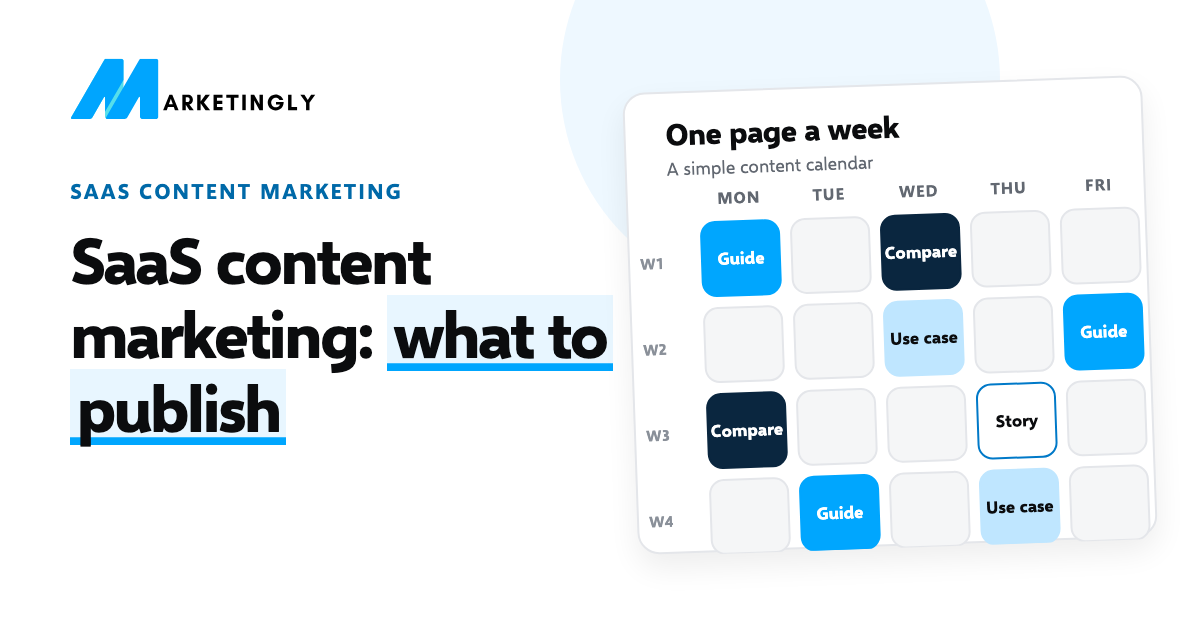
- Four kinds of content do four jobs: guides attract, comparisons help people decide, use cases convince and customer stories prove.
- Start with the pages closest to a sign-up, then widen to guides.
- Write from real customer questions, not from a keyword list alone.
- Measure sign-ups and trials from content, and the pages that assist, not only visits.
- Be consistent. A steady monthly plan beats a burst of posts followed by silence.
What is SaaS content marketing for? #
Content does three things for a software company. It helps people who do not know you find answers to their problem. It helps people who are comparing tools decide. And it gives your sales and support teams pages to send to prospects and customers. If a page does none of these, it is probably not worth writing. Content also supports your SaaS SEO strategy, because search engines reward helpful pages that answer real questions.
What should a SaaS company publish? #
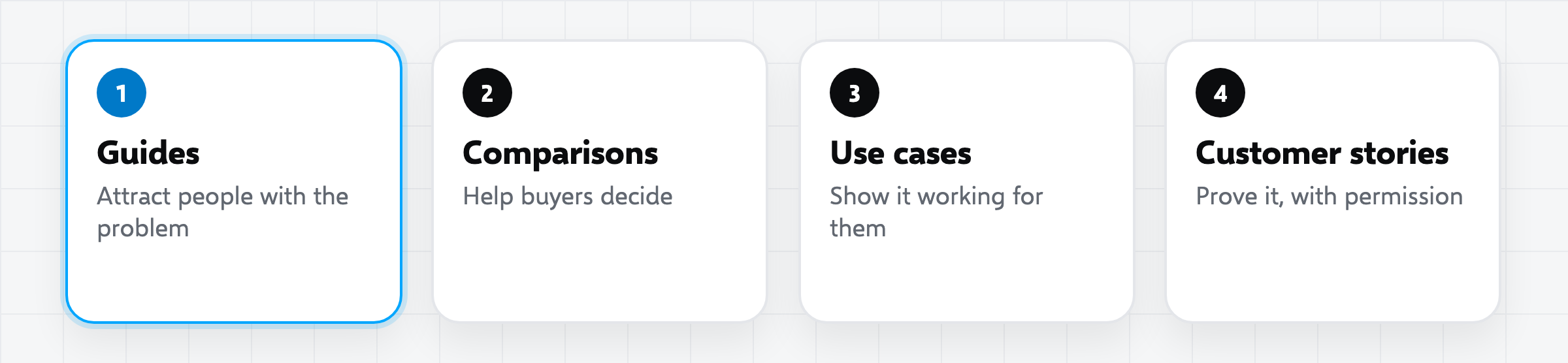
1. Guides and how-tos for people with the problem #
These attract people who do not yet know your product. “How to track project hours” or “how to run a weekly team meeting” answers a real need. Write the guide so it is useful without your product, and show where your product fits, in a natural way. Use plain words and real examples.
2. Comparison and alternative pages for people deciding #
Buyers search for “X vs Y” and “alternatives to X”. Write honest comparisons that say who each tool suits, including when your product is not the right fit. Honest pages build trust, and they sit close to a sign-up.
3. Use-case and industry pages for people who want proof it works for them #
A page for each kind of customer or use case (“for agencies”, “for recruiters”) shows how the product fits their work. Use their words, a relevant screenshot and one clear next step.
4. Customer stories for proof #
A short story of how a real customer uses your product, in their words and with their permission, answers the question every buyer has: does it work for someone like me? Share only numbers the customer has agreed to and you can show.
5. Templates, checklists and free tools #
A useful free template or tool attracts people searching for it and gives you a reason for them to share it and return. Make it good, and make sure it relates to what your product does.
In what order should you publish? #
- Product, feature and use-case pages (the ones closest to a sign-up).
- Comparison and alternative pages for the two or three rivals buyers mention most.
- Guides for the five problems customers raise most.
- Customer stories as you collect them.
- Templates and tools when you have the time to make one well.
For how to match each kind of page to what people search, see the buying stages in our SaaS SEO strategy guide.
What does a simple content calendar look like? #
A small team can manage this each month, and you can scale it up or down:
- Week 1: Pick the topic from a real customer question. Check what already ranks and what is missing.
- Week 2: Write and edit. Add an example, a screenshot or a number you can back up.
- Week 3: Publish, link from related pages and share it with the people who asked.
- Week 4: Review the numbers for the last piece, and update an older page that has slipped.
One strong page a month is better than four weak ones. Updating an old page that already gets visits is often a better use of time than writing a new one.
How do you measure SaaS content marketing? #
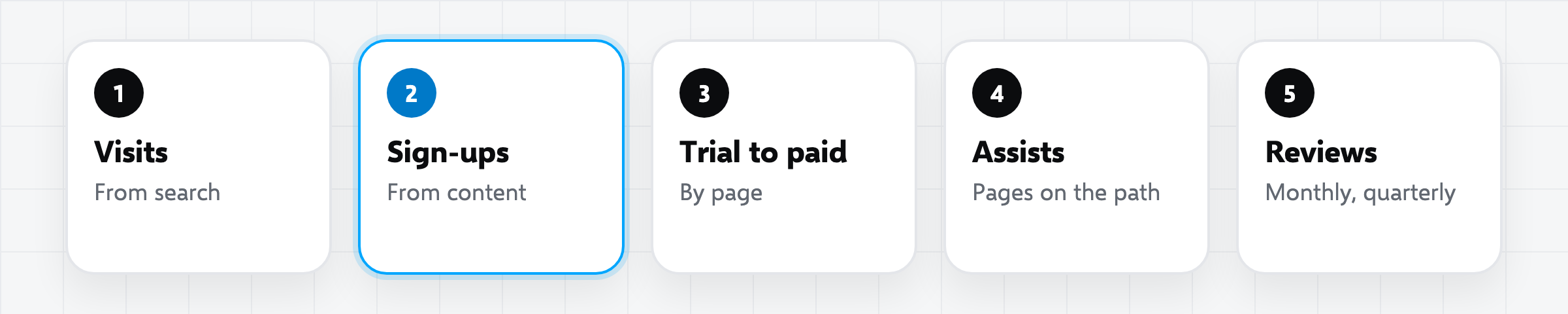
- Organic visits to each page, from search.
- Sign-ups or demo requests that start from content. Set up your analytics so a sign-up records the first page the person saw.
- Trial-to-paid rate by the page they came from. Some pages bring many sign-ups and few customers.
- Assisting pages: pages people read before they signed up, even if they did not sign up on the first visit.
- A monthly and a quarterly review to decide what to write, update or drop.
Content takes time to show results, so judge it over quarters, not days. If you need leads sooner, combine it with paid search for SaaS and with outreach on LinkedIn, where B2B buyers spend time.
Common mistakes #
- Writing for search engines, not people. Pages that read as padding do not convert.
- Only top-of-funnel posts. Without product and comparison pages, readers have nowhere to go.
- No next step. Every page needs one clear link to a trial or a demo.
- Counting visits only. Traffic that never signs up is a cost.
- Abandoning it. Content builds slowly, and stopping early wastes what you built.
- Making claims you cannot back. Use only numbers and quotes you have permission to share.
Common questions #
What is SaaS content marketing? #
It is publishing helpful pages, such as guides, comparisons, use cases and customer stories, to attract the right people to your software and help them decide to try it.
How often should a SaaS company publish? #
Often enough to keep a steady plan, and no more than you can do well. For a small team, one strong page a month is a good start.
How do I measure content marketing for SaaS? #
Track organic visits, sign-ups and demos that start from content, the trial-to-paid rate by page and the pages that assist sign-ups.
Should I write about my competitors? #
Yes, honestly. Buyers search for comparisons and alternatives, and fair pages build trust even when they say your product is not for everyone.
How long until content brings sign-ups? #
It depends on your site and market, but plan in quarters, not weeks. Pages closest to sign-up usually show results first.
Where to start #
List the five questions customers ask most, and check whether you have a page for each. Then write the one closest to a sign-up. If you would like help planning a content programme, see our SEO for SaaS service or book a free consultation.