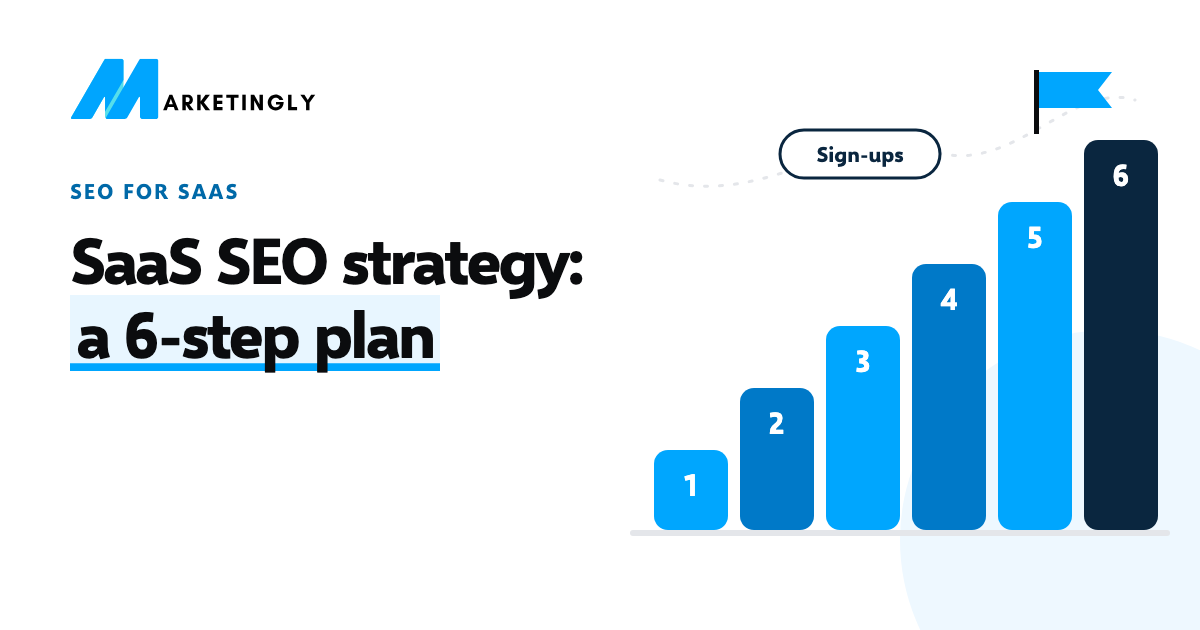
A SaaS SEO strategy is a plan for getting the right people to find your software through search, from the first time they look up a problem to the day they sign up. The six steps below take you from who you sell to, through keywords, technical basics and pages, to the numbers that show whether it works. It is written for founders and marketers who do not have a big team.
If you would rather work through it with someone, our SEO for SaaS service follows the same plan.
In short
- Start with the customer and the job they want done, not with keywords.
- Map keywords to the buying journey: the problem, the solution and your product.
- Make sure search engines can crawl and index your site before you publish more.
- Build product, feature and use-case pages first, then helpful guides.
- Measure sign-ups and demos from search, not only visits.
Why is SEO different for SaaS? #
A SaaS buyer rarely searches for your product by name at first. They search for the problem (“how to track project hours”), then for kinds of tool (“time tracking software”), then for names and prices. Your site has to meet them at each stage. SaaS sites also have a feature that helps: a product that can be explained in pages, and customers who can tell you exactly what they wanted. A good strategy uses both.
The six steps #
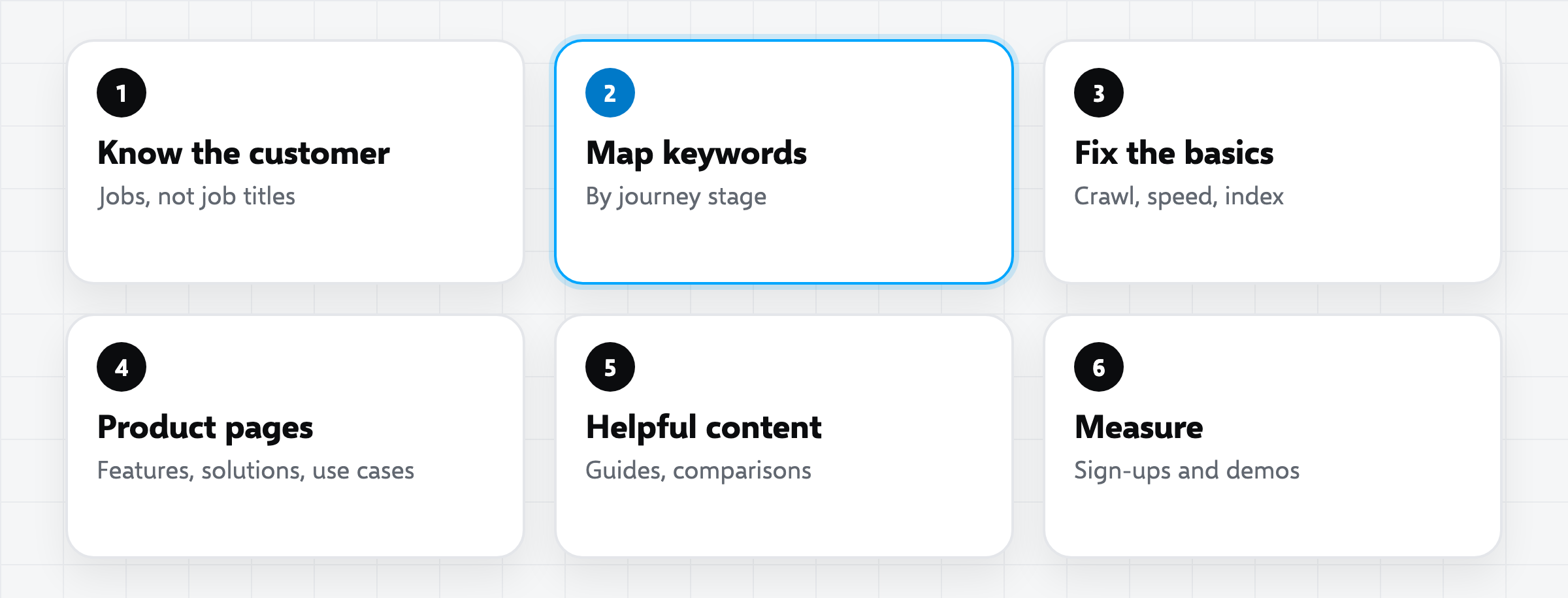
1. Know the customer and the job #
Write down who uses your product and what job they are trying to get done. “Freelance designers who want to send invoices without chasing” is more useful than “small businesses”. Talk to a few customers and ask what they searched for before they found you, what they tried first and what made them switch. Their words are your best keyword source.
2. Map keywords to the buying journey #
Group the searches by what the person knows:
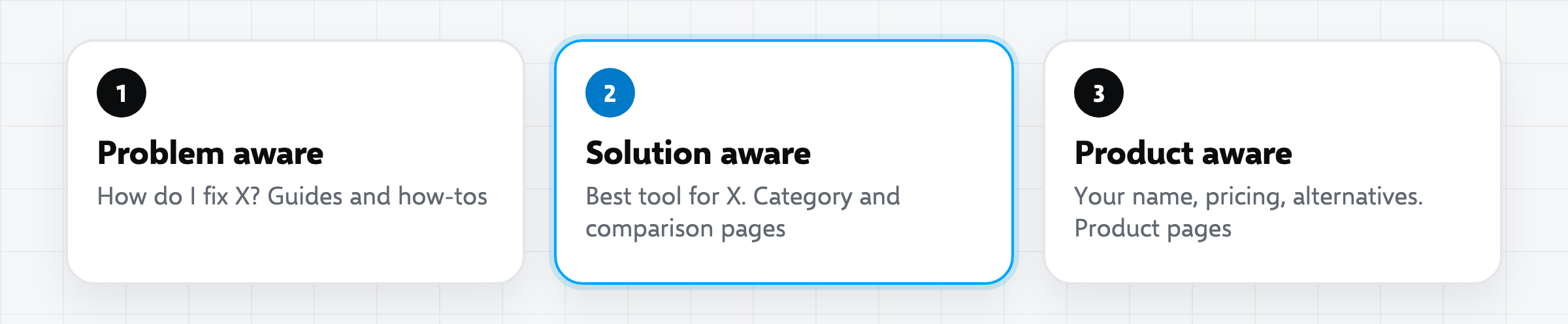
- Problem aware: they know the pain but not the fix. Searches such as “how to track project hours”. Match them with guides and how-tos.
- Solution aware: they know a tool category exists. Searches such as “time tracking software”. Match them with category and comparison pages.
- Product aware: they know you or your rivals. Searches such as your name, “pricing” and “alternatives”. Match them with product, pricing and alternative pages.
Use a keyword tool to see search volume and difficulty. For a young site, choose phrases that are specific and less competitive, and be wary of broad ones that big companies already own.
3. Fix the technical basics #
Before you publish a lot, check that search engines can reach and understand your site. Crawl it and look for pages blocked from Google by mistake, broken links, slow pages, duplicate titles and pages with no links to them. Many SaaS sites hide pages behind JavaScript that search engines may not read well, so test how your key pages look without it. Our technical SEO audit checklist lists 25 checks, and Google’s SEO starter guide covers the basics.
4. Build product, solution and use-case pages first #
These pages sit closest to a sign-up, so they are worth more than most articles. Make a page for each main feature, each kind of customer and each use case, with plain words about what the product does, a screenshot, proof (with permission) and one clear next step such as a trial. Add pricing and comparison pages, because many buyers search for them.
5. Publish helpful content #
Guides, checklists, templates and tools answer the problem-aware searches and show you know the field. Write for the person with the problem, not for the search engine. Google says it wants content made to help people, and explains how in its helpful content guide. Link each guide to the product page that solves the problem it describes, in a natural way.
6. Measure sign-ups, not only traffic #
Visits are a means, not the goal. Track organic visits, sign-ups or demo requests that start from organic search, which pages they begin on and how many trials become paid. Connect your analytics to your sign-up events so you can see this. Review it monthly, and use it to decide what to write next.
How long does SaaS SEO take? #
It depends on your site’s age, your market and your starting point, so we do not promise a date. A realistic plan treats SEO as a steady investment that builds over months. Technical fixes and product pages can help sooner, while guides and authority take longer. Pair SEO with faster channels such as paid search for SaaS if you need leads in the meantime.
Common mistakes #
- Writing blog posts before product pages. Posts bring readers. Product pages bring sign-ups.
- Chasing broad, famous keywords. Start with specific phrases you can win.
- Ignoring the technical side. Great pages cannot rank if search engines cannot read them.
- Measuring traffic only. Count sign-ups and trials from search.
- Copying competitors’ content. Add what you know that they do not.
- Stopping after three months. SEO compounds slowly, so give it time and keep measuring.
Common questions #
What is SaaS SEO? #
It is search engine optimisation for software-as-a-service companies: getting the right people to find your product through search, from their first question to sign-up.
How is SaaS SEO different from normal SEO? #
SaaS buyers search in stages, from the problem to the product, so you need pages for each stage. Success is measured in trials and demos, not just visits.
Should a SaaS company start with a blog? #
Not first. Start with the technical basics and the product, feature and use-case pages, then add guides that point to them.
How many articles does a SaaS need? #
There is no set number. Quality and fit to your customers matter more than the count. Publish what answers real questions.
Can I do SaaS SEO myself? #
Yes, with time and a plan. If you want a second opinion or help, book a free consultation.
Where to start #
Talk to three customers this week and write down the words they used before they found you. Then crawl your site and fix the basics. If you want a team to build the plan with you, see our SEO for SaaS service.